Blog & News

Pediatric Vision

Why Fall Is the Perfect Time for a Back-to-School Eye Exam

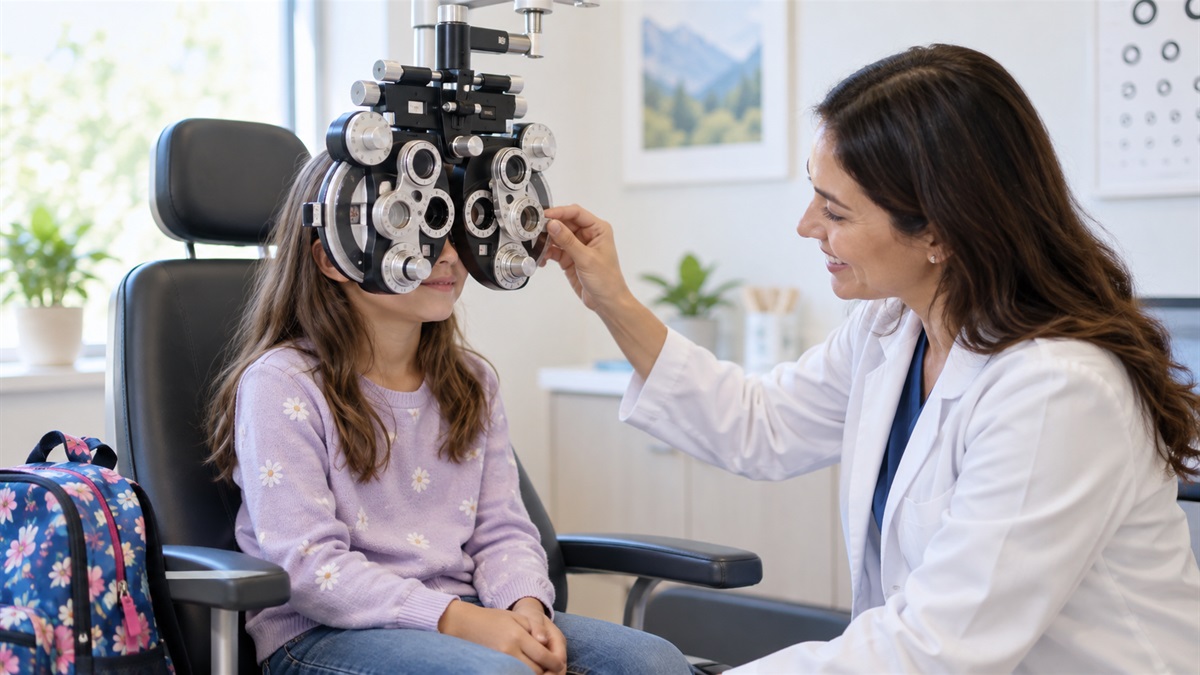
Even after the first weeks of school have come and gone, it’s not too late to schedule your child’s annual eye exam — and fall is actually one of the best times to do it. Vision problems are one of the most common, and most overlooked, causes of struggling in the classroom. The American Optometric Association estimates that up to 1 in 4 school-age children has an undiagnosed vision problem, and kids rarely announce that they can’t see the board clearly. Instead, you might notice: Sitting unusually close to the TV or holding books close to the face Frequent headaches or eye rubbing after schoolwork Losing their place while reading, or avoiding reading altogether Squinting or tilting the head to
Read More »
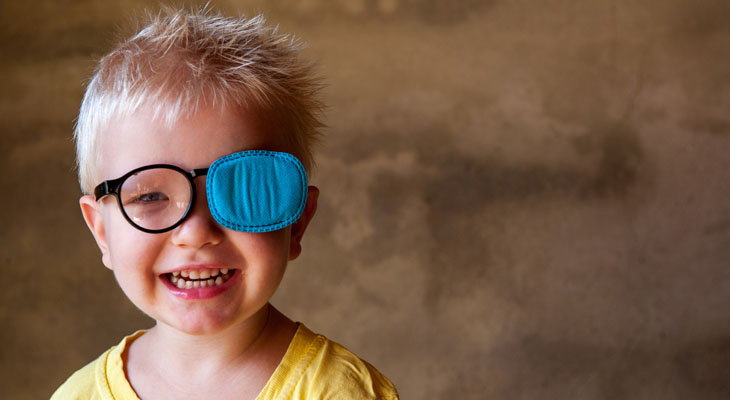
A smiling young boy with blonde hair wearing glasses and a bright blue fabric eye patch over his left eye.
Pediatric Vision

Lazy Eye

Lazy eye, also referred to as amblyopia, is a condition that develops in infancy or early childhood, and it typically starts when the focus in one eye is more enhanced than the other. The eye with less focus might be impaired due to a significant amount of farsightedness or astigmatism, or something could be obstructing light from getting through like a cataract or debris in the back of the eye. Amblyopia may also develop due to an ocular misalignment known as strabismus, in which one eye turns inward or outward, keeping the eyes from focusing together on an object. This can cause double vision. How Lazy Eye Effects Your Vision In all of these cases, the brain receives two different

Read More »
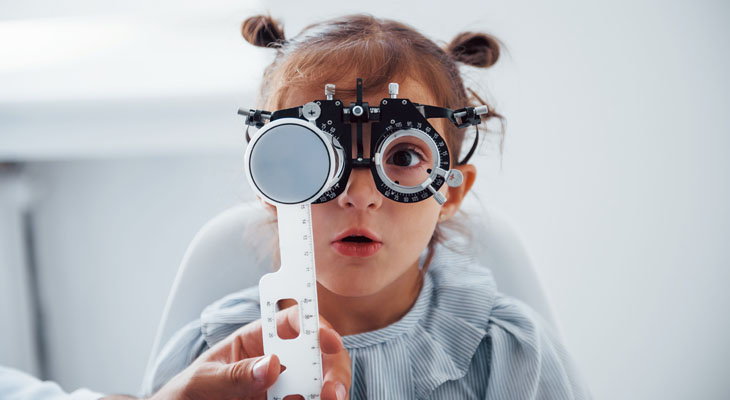
A young girl with her hair in two small buns sitting for an eye exam, wearing a metal trial frame while a hand holds an occluder over her left eye.
Pediatric Vision

Pediatric Ophthalmology

Ophthalmology addresses the physiology, anatomy and diseases of the eyes. Pediatric ophthalmology focuses on the eyes of children. Pediatric ophthalmologists examine children’s eyes to see if they need corrective lenses or other treatments to improve their vision. Training for Pediatric Ophthalmologists Pediatric ophthalmologists graduate from medical school just like other types of doctors, but they decide to specialize in children’s eye health. In addition to studying about the structure and disorders of the eyes, these specialists undergo additional training in examining children. They go to extra lengths to make sure that children feel safe and comfortable within the medical setting and with the sensitive proceedings of an eye exam. Benefits Vision develops neurologically until a child is about 12 years

Read More »

Categories

Latest Post

Consultation Service

Lorem ipsum dolor sit amet consectetur adipiscing elit dolor

Get Your Eyes Checked At Our Clinic

and get a discount on your new glasses